‘There is no such thing as ‘safe’ climate change (Royal Society)
’Even the global temperature increase to date (just over 1°C) is contributing to effects that are impossible to adapt to in some regions As the temperature rises further, so will the risk of more widespread and dangerous climate impacts; from sea level rise, increasing frequency and intensity of climate extremes such as heat waves, floods and droughts,’ (Royal Society December 2009 Preventing dangerous climate change The need for a global agreement).
Children are most vulnerable
May 2018 UN Secretary General Climate change: An ‘existential threat’ to humanity, UN chief warns global summit
Attributing extreme weather to climate change Interactive map
G20 Climate Change Atlas Right up to 2020 data.
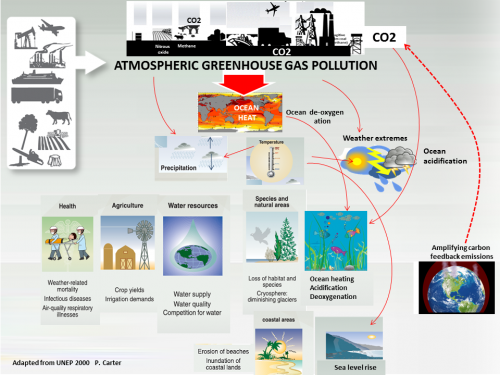
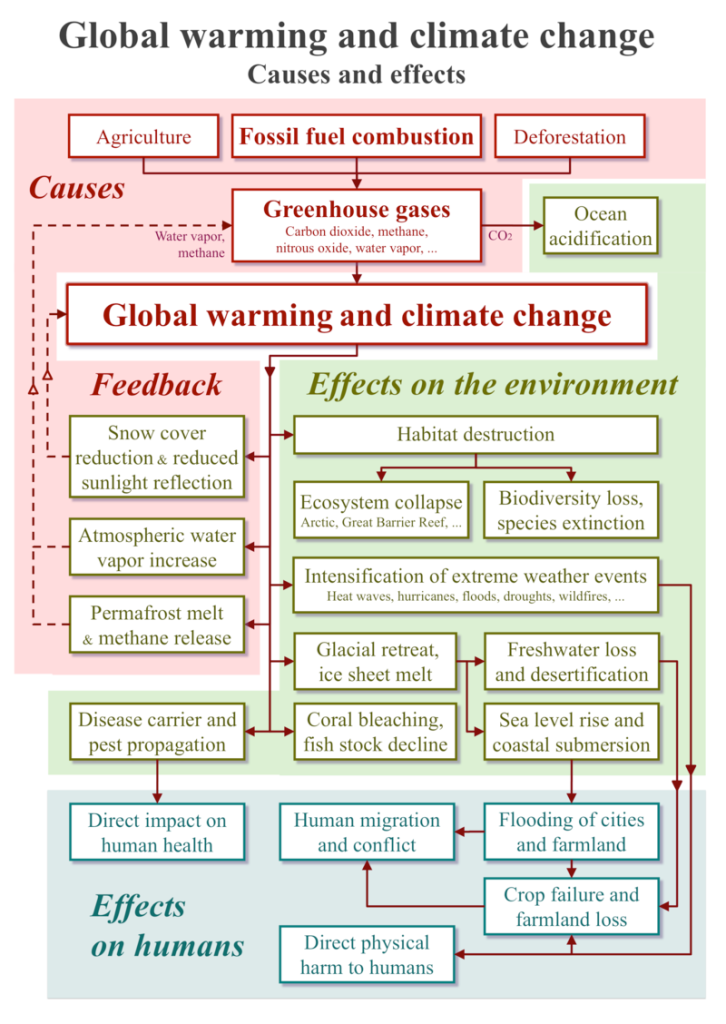
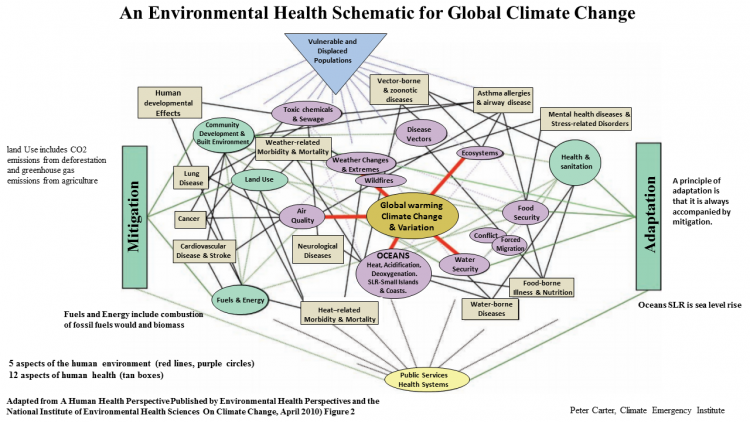
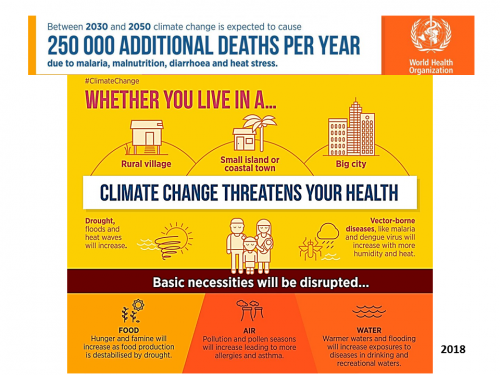
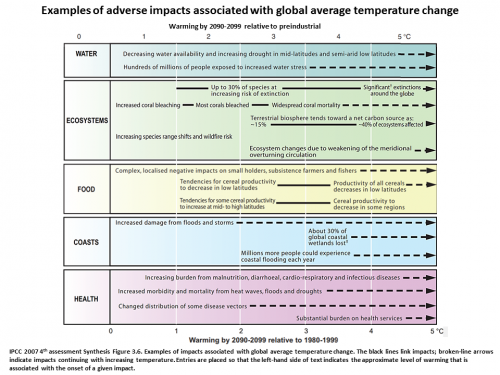
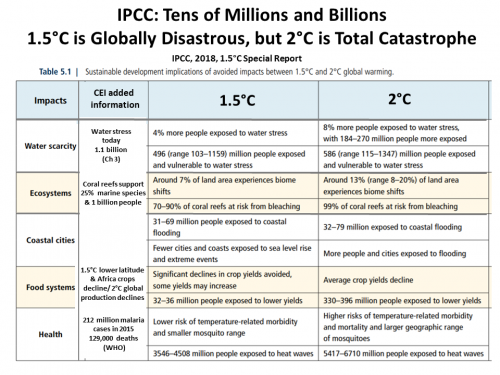
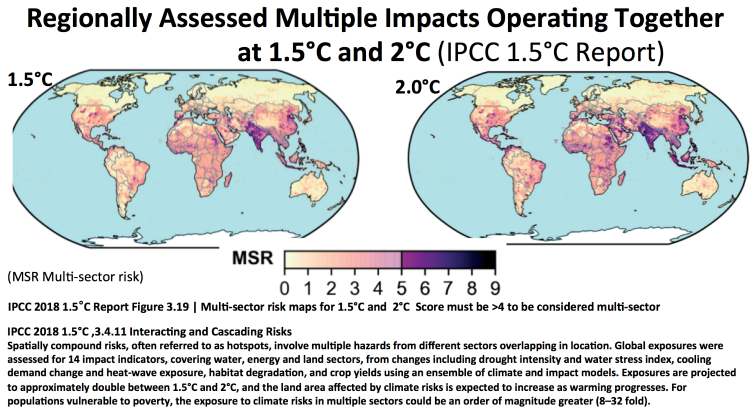
What are the worst impacts from global climate change?
1.Amplifying positive feedbacks-
The greatest single effect from global warming to the integrity of the planet and to all life is amplifying feedbacks to global warming- that increases warming. The feed back extra watming increases with global temperature, but also with time.
Warming from atmospheric GHG pollution causes more global warming, that is an increase in the rate of global temperature increase. There are very many such feedbacks. The largest source of feedbacks is the Arctic, which is now warming several times faster than the rest of the planet. All of these Arctic feedbacks are now operant.
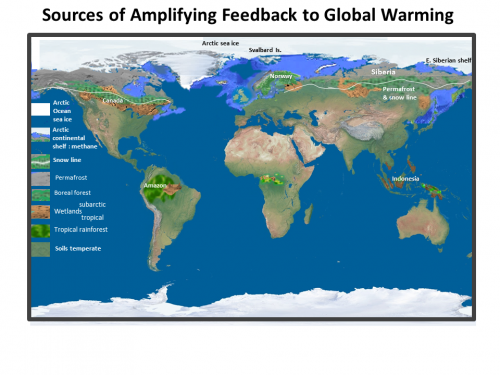
Several large sources of amplifying feedbacks are also tipping points
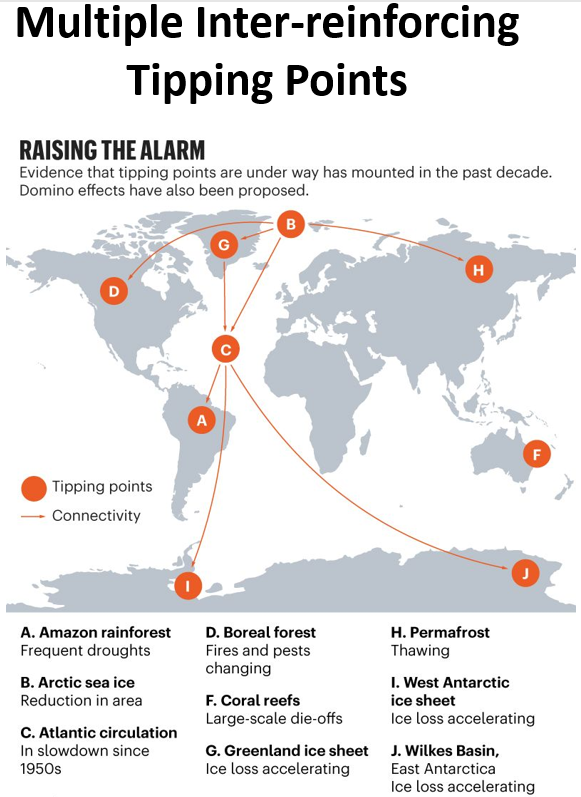
What are tipping points?
The term ‘‘tipping point’’ commonly refers to a critical threshold at which a tiny perturbation can qualitatively alter the state or development of a system (T. Lenton).
Tipping elements in the Earth’s climate system Timothy M. Lenton et al PNAS ,Feb 2008
2. Food insecurity
The greatest dangers to human populations or humanity are obviously water deprivation, food deprivation and health deprivation- and their combinations. They are all increased by global climate change and all fall under food security dangers. The worlds best food producing regions are in the Northern Hemisphere and since 2000 a number of badly damaging extreme weather events have hit these NH regions. The evidence for causation due to global warming plus Arctic amplification snow and sea ice albedo cooling is looking definite with recent research.
3. Extreme weather events which is categorized as one climate change impact is extremely dangerous.
This is most damaging to human health and to crops and in labor intensive agriculture is more than doubly dangerous.
Global climate change commitment makes all impacts far worse than they seem today.
THE GREAT MULTIPLIER Global climate change has been known as the great multiplier.
It has a multiplier effect increasing many pre-existing global environmental degradations and
a multiplier effecton on existing socio-economic deprivations of billions of the most climate change vulnerable
Global climate change is uniquely disastrously and catastrophically dangerous because it adversely impacts all systems of the biosphere and all human systems, impacts increasing with global temperature increase. Impacts interact adversely.
The IPCC 2018 1.5°C report showed that multiple widespread disastrous impacts at 1.5°C and planetary catastrophic impacts at 2°C (including runaway trigget).
The 2 general catastrophic effects of the multiple impacts are
1) For humanity the collapse of world agriculture and of civilizationand for the planet biosphere collapse.
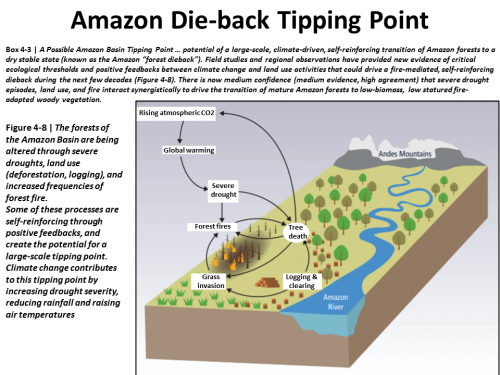
2) For all life biosphere collapse is associated with amplifying (+ve) feedbacks, abrupt climate change, tipping points, IPCC ‘singularities’, hothouse Earth and runaway, exacerbated by increasing extreme events.
AGRICULTURAL COLLAPSE The single worst impacts on humanity (only) is the multiple adverse impacts on agricultural crops (and livestock). Unmitigated global climate change (as now) leads to collapse of world agriculture followed by collapse of civilization
GLOBAL COLLAPSE OF ECOSYSTEMS We are in the 6th mass extinction of species due to global ecosystem degradation and destruction. UN ecosystem assessments show human civilization is headed to collapse due to this cause
FEEDBACK RUNAWAYBIOSPHERE COLLAPSE The overall worst impact on planet and human populations is multiple interacting amplifying feed-backs. Unmitigated climate change inevitably leads to all of these feed-backs being irreversibly triggered.
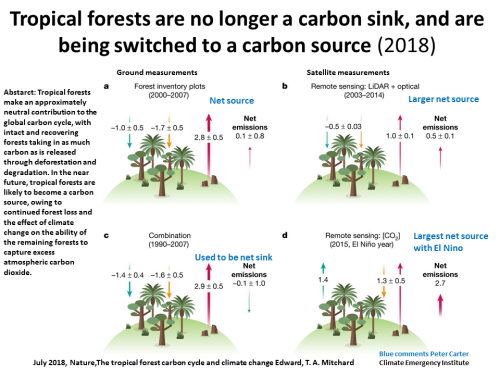
CARBON SINK FAILURE Making matters even worse the terrestrial forest carbon sink fails with increasing warming, and the ocean sink will fail under to much ocean heat.
We have already brought about the 6th mass extinction. All climate change indicators are at record high and accelerating.
Multiple feed-backs leads to hothouse Earth and runaway – the end of our world, the human race and almost all species- the greatest extinction of life ever.
The IPCC assesses computer modeled global climate change impacts under modeled projected warming to 2100, which is an inadequate assessment to protect human population health.
An environmental health impacts assessment (which we should have been using by assessing GHG pollution) is broader by assessing all impacts from all sources of GHG emissions.
Computer modelling is used to project impacts. over future years. Modelling is not necessary to know the impacts of global climate change under increasing global surface temperature, which are predictable by the basic well-known science.
HUMAN HEALTH Human population health (multiple adverse impacts), since 1990 have only been confirmed and found to be worse. These are the direct effect of surface warming and of multiple increasing extreme events (IPCC includes forest fires). Increasing water and food insecurity are key confirmed impacts already taking place.