Global warming is the global average (land-sea) temperature increase from 1850-1900
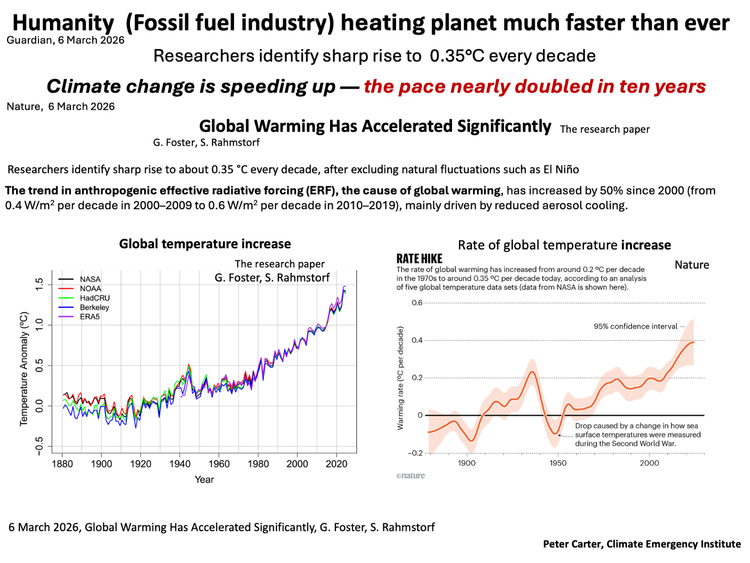
Global warming is accelerating for sure: March 2026 Global Warming Has Accelerated Significantly,G. Foster, S. Rahmstorf
2023 and 2024 rate of warming was unprecedented,Indicators of Global Climate Change 2022, Piers Forster et al
Human-induced warming has been increasing at an unprecedented rate of over 0.2°C per decade. This high rate of warming is caused by a combination of greenhouse gas emissions being at an all-time high over the last decade, as well as reductions in the strength of aerosol cooling.
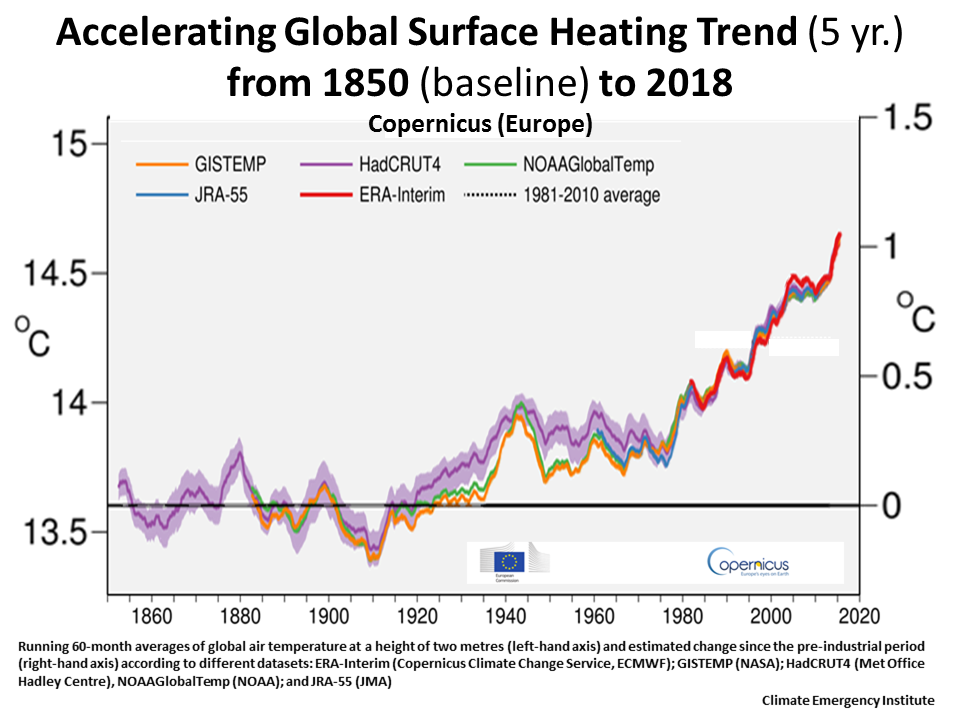
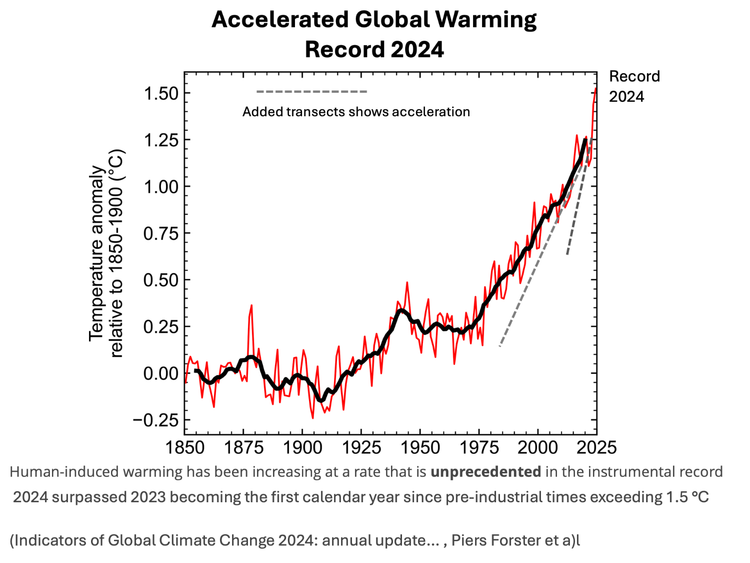
Big Record 2023 and 2024 temperatures
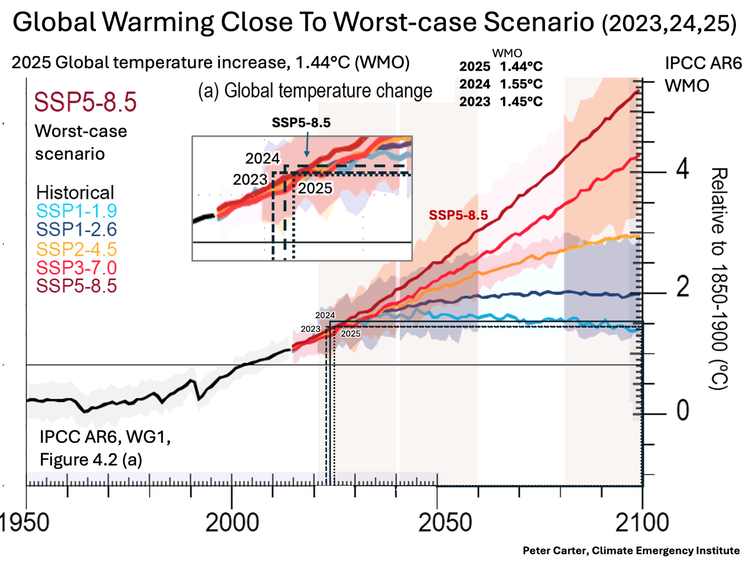
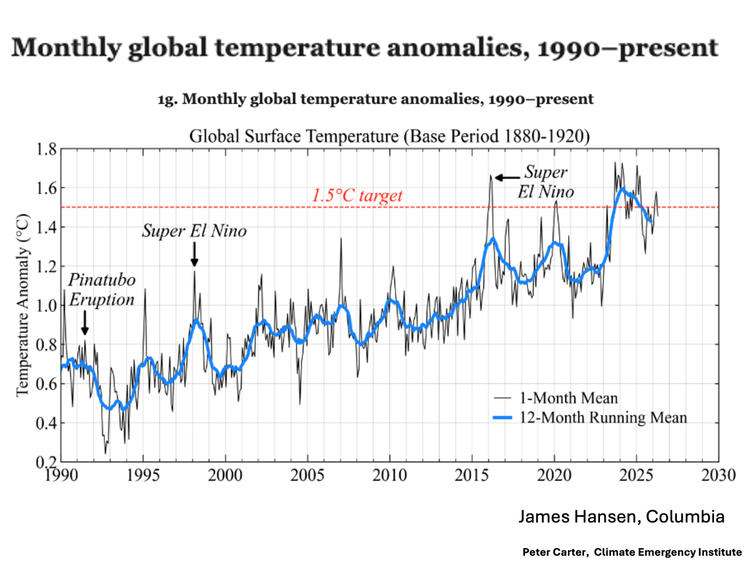
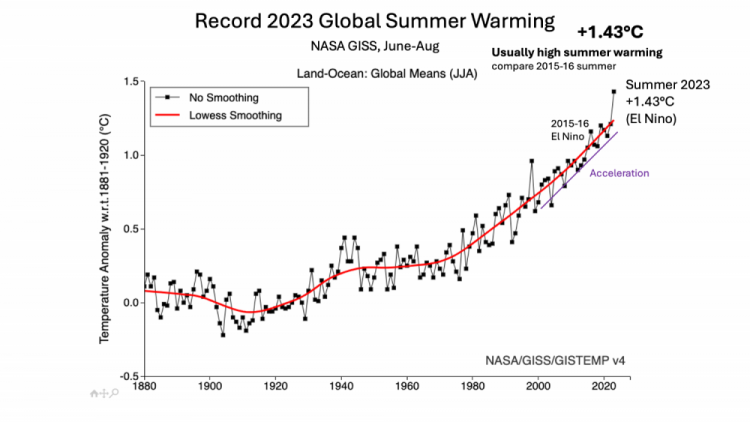
2024 was the record at a huge 1.55°C (no El Nino)
2023 at 1.45°C before that was a record by a record large margin, boosted by a powerful El Nino WMO put it at 1.45°C
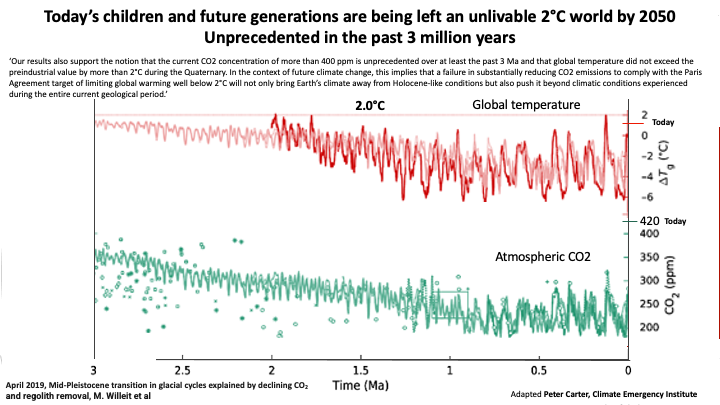
2023 and 2024 were the highest global temperature in 125,000 years
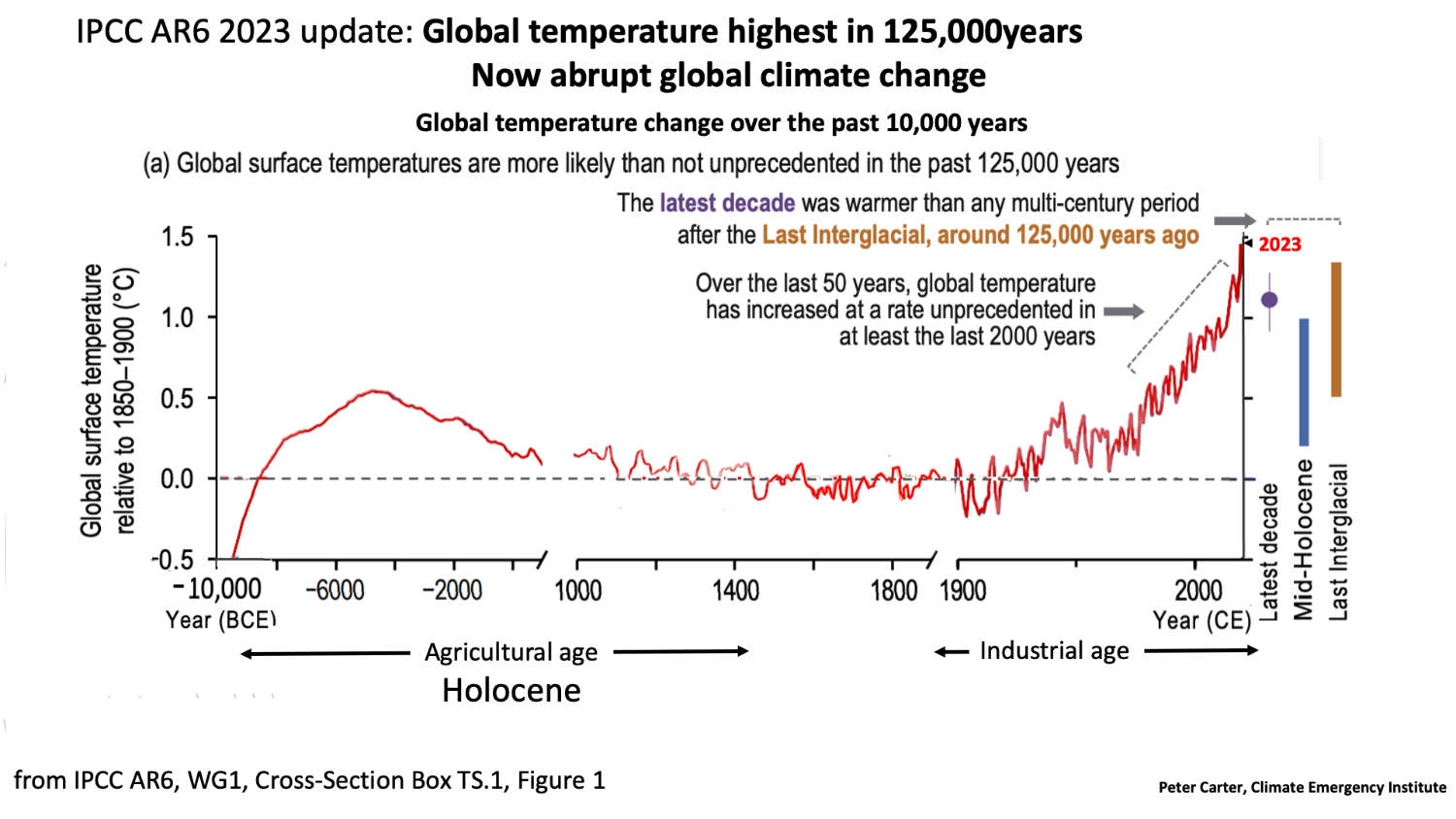
2023 and 2024 were the highest global temperature in 125,000 years
Causes for the big record 2023 and 2024 temperature increases
1. Record atmospheric CO2, increasing faster than ever
2. Record all atmospheric GHGs
3. El Nino
4. Decline of cooling aerosol emissions – measures have been taken to further reduce fossil fuel air pollution reducing air pollution sulfate cooling aerosols
Global warming is accelerating even without big 2023 and 2024 records. The long-term and short-term trends of global warming are accelerating
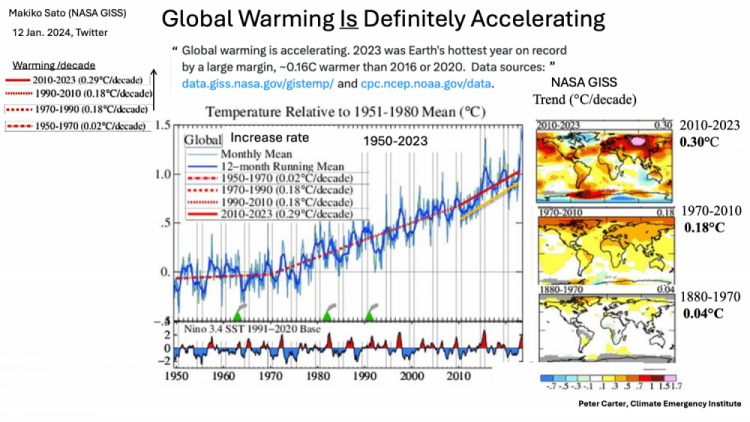
Global warming Acceleration – Dr. Makiko Sato (NASA GISS) Jan. 2024
Industrial age global warming is extremely rapid- an abrupt global temperature increase
Aspects of global warming
Global warming is average Land-ocean, the ocean having a cooling effect. Global warming is the annual average.
El Nino/La Nina
Global tends to be higher in an El Nino phase and cooler in La Nina. Global summer warming would be more useful, for heat waves, wild-fires, drought
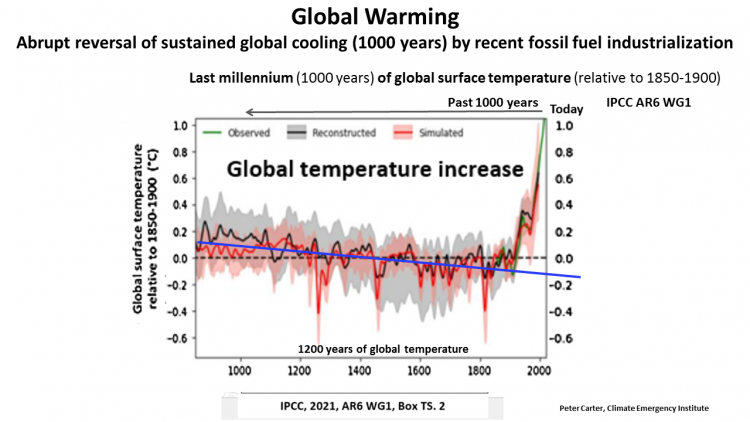
Global Warming
Global warming is the global average (land-sea) temperature increase from 1850-1900
Climate Emergency Institute
Global warming is higher :
- in the night-time than the day
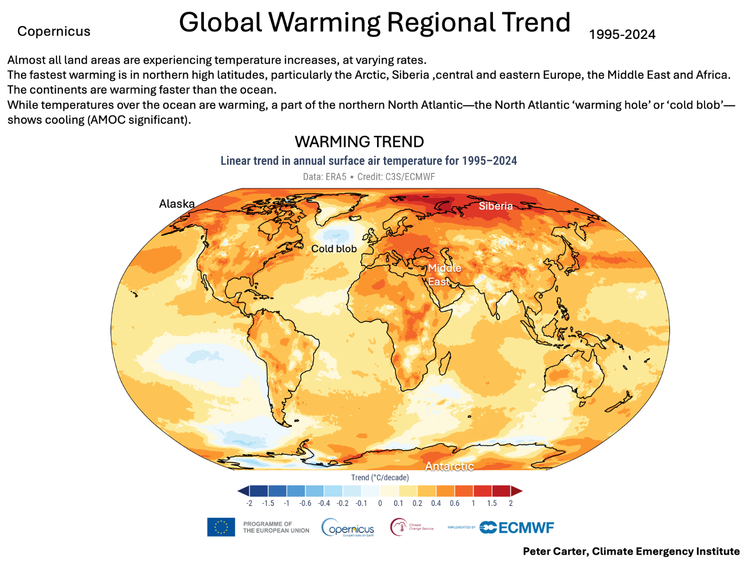
- over land than over sea (sea surface temperature SST )
- over central continents
- in the northern hemisphere and
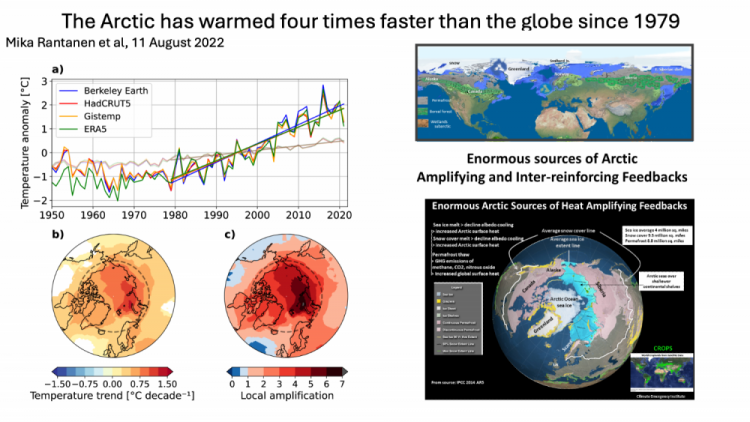
- highest in the Arctic (feedback amplification)
We need to know warming in the summer for heat waves, wild fires and drought
Arctic temperature
The Arctic heating as been at twice the global rate, as the science has said for years- From 1980 to 2021 it heated up to 4x as fast as the rest of the planet. That puts the Arctic amplifying feedbacks and tipping points coming on much faster. The Arctic holds more carbon, till recently safely frozen, than other region on the planet. Yes – another reason for immediate global emissions decline.
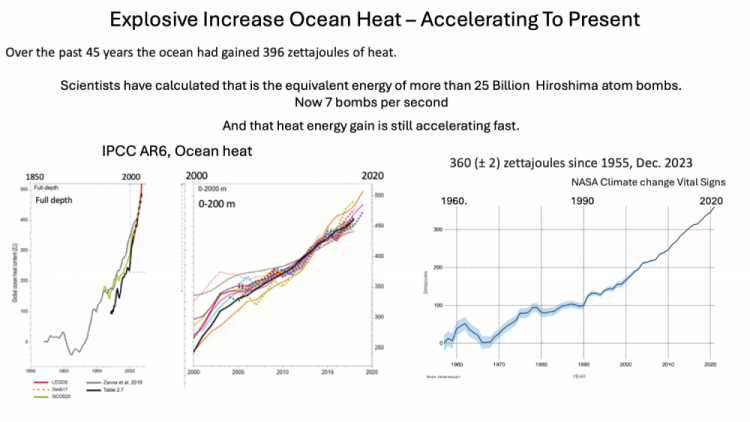
OCEANS Record high ocean heat is increasing at accelerating rate.
93% of added GHG heat has gone to the oceans, making ocean heat a much better single guide for assessment and mitigation than global surface warming. Global warming varies,with volcanic eruptions, El Nino La Nina phases, while ocean heat does not.
Marine heat waves
Ocean marine heat waves are increasing. 2023 was a record for marine heat waves
On an average day in 2023, nearly one third of the global ocean was gripped by a marine heatwave, harming vital ecosystems and food systems. Towards the end of 2023, over 90% of the ocean had experienced heatwave conditions at some point during the year.
(WMO March 2024, State of Climate in 2023).
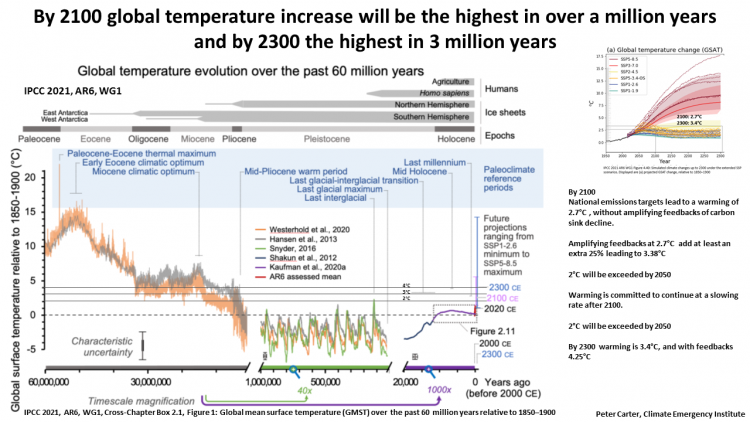
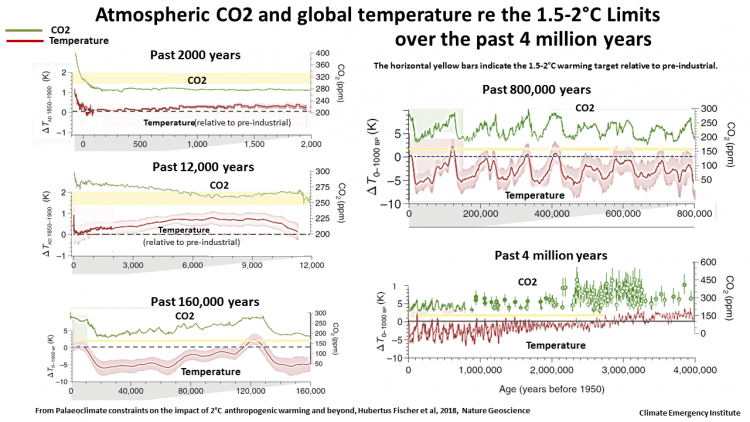
Global temperatures in the distant past
Global temperature is now very high with respect to past million of years