
The Arctic is the most rapidly warming region on Earth, now heating four times faster than the global average. The loss of Arctic sea ice, permafrost thaw, and carbon feedback emissions from warming wetlands represent the greatest single threat to climate stability — holding three to four times all the carbon currently in the atmosphere. The Arctic has already switched from a carbon sink to a carbon source.
Earth Emergency The Arctic has switched from carbon sink to source with accelerating permafrost feedback emissions underway NOAA Arctic Report Card 2016, 2019, 2024
IPCC AR6 Polar Regions Fact sheet
International Cryosphere Climate Initiative
NSIDC Daily Arctic sea ice extent
July 2019 Total Arctic sea ice loss would be equivalent to 1 trillion tons CO2 emissions/25 years global warming
The Arctic is warmng fast, due to Arctic amplification from the loss of sea ice, glaciers and snow.
Animation Arctic snow & sea ice feedback
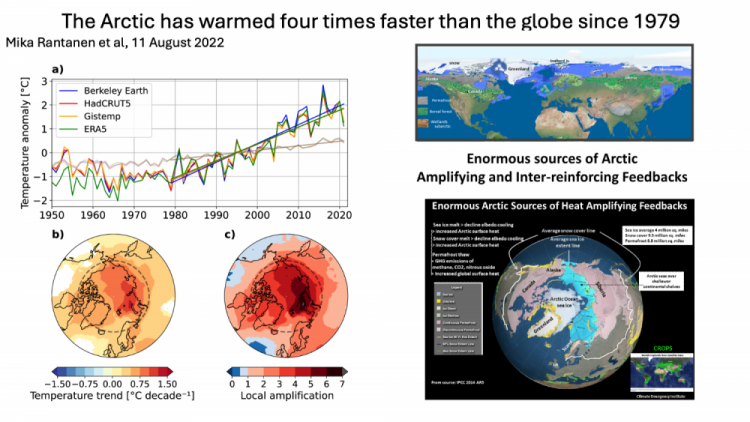
Aug 2022, The Arctic has warmed nearly 4X faster than the global average, since 1979.
Arctic amplifying feedbacks – enormous sources
The single worst effect of global warming- is triggering enormous sources of Arctic amplifying feedbacks and tipping points. This is now a certainty. It demands immediate action to put global emissions into decline by 2025 at the latest (IPCC AR6, WG3, SPM ,C.1)
Vast Northern (subarctic) peat-rich wetlands have already been emitting more methane.
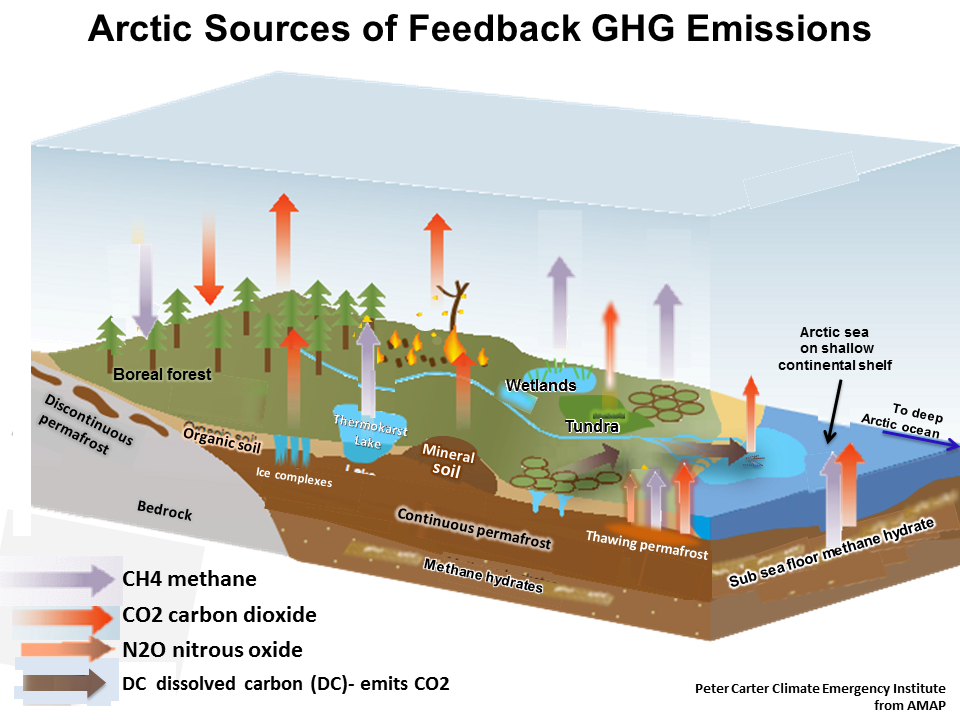
Permafrost has been thawing for years and is emitting methane, much more CO2 than expected, and nitrous oxide- which is all irreversible.
Arctic continental shelf methane hydrate (frozen sold methane) under Arctic sea warming will emit methane slowly for 1000s of years. An explosive release is considered unlikely.
Arctic permafrost carbon 350 PgC by 2100: +1.5C by 2100
(IPCC AR5 WG1 FAQ 6.1)
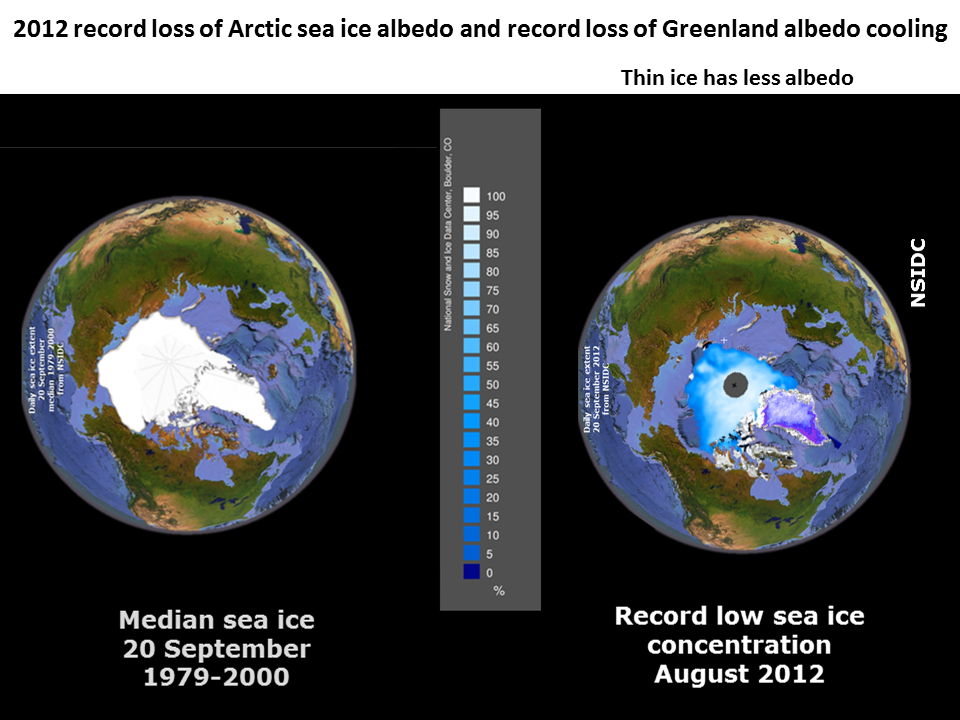
Arctic snow& sea ice albedo feedback – less cooling
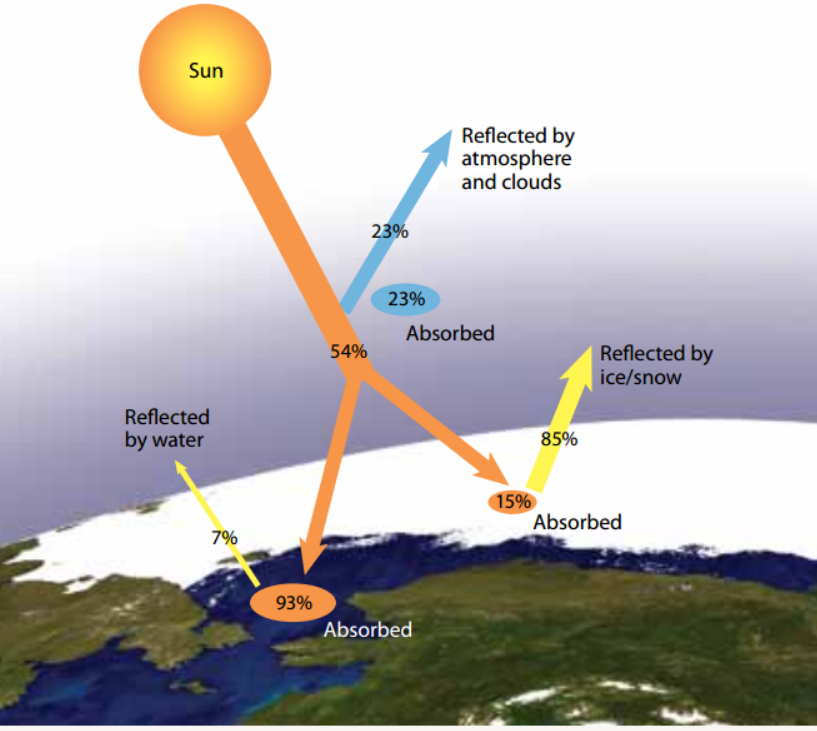
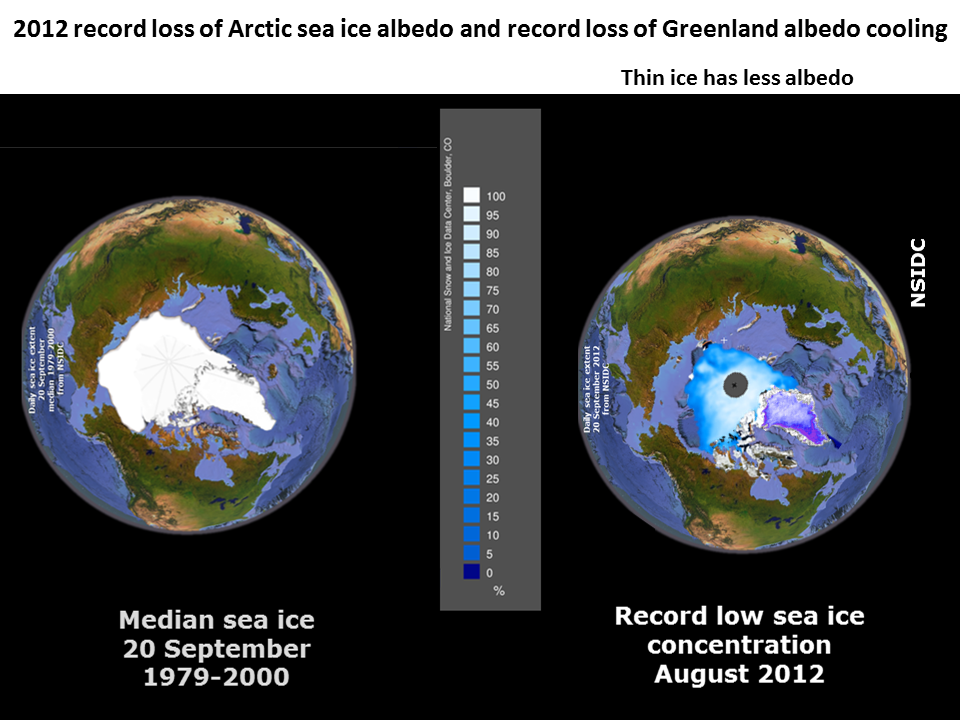
This albedo cooling effect keeps the Arctic frozen and keeps the enormous pool of Far North and Arctic carbon safely cold and frozen. The shiny white snow and sea ice reflect incoming solar energy back out to space.
Less Arctic albedo cooling results in more Arctic warming, an amplifying feedback called Arctic/polar amplification.
While the Arctic sea ice provides a vast extent of albedo cooling (which is now declining fast) to its September minimum, Far North snow from Spring to mid Summer provides an equally vast expanse of albedo cooling equivalent to the sea ice albedo (M. Flanner 2011). This is also rapidly declining as the snow declines earlier every year.
Arctic & Far North carbon
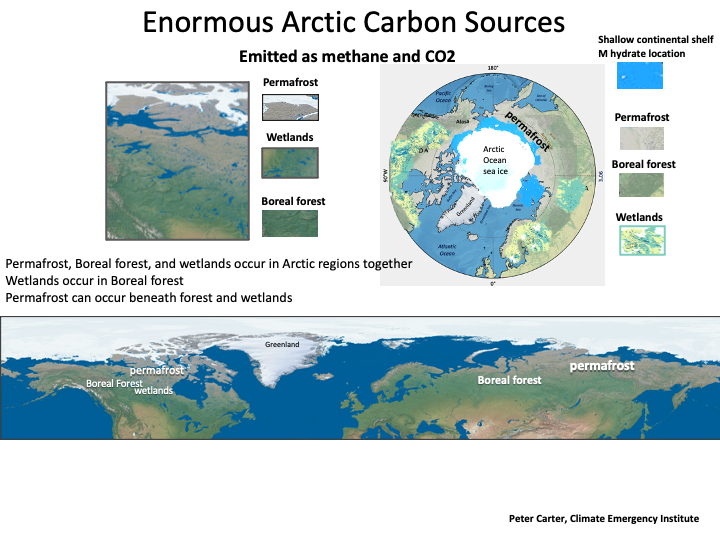
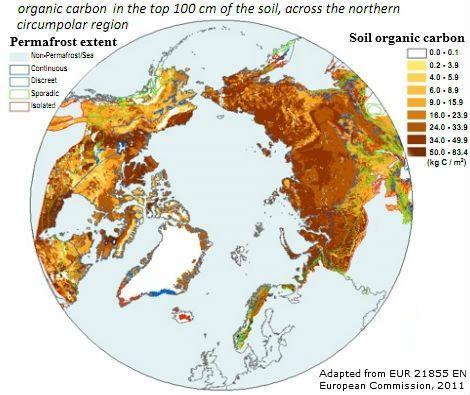
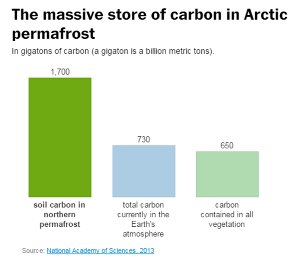
Arctic permafrost holds twice the carbon in the atmosphere and subsea floor frozen solid methane gas hydrate holds at least as much carbon as in the atmosphere. All this carbon will be released with too much warming, and that has started already.
The sources of Arctic carbon feedback emissions are:
- warming wetlands,
- thawing permafrost and
- over very long term warmed sea floor methane hydrates.
These regions hold three to four times all the carbon in the atmosphere.
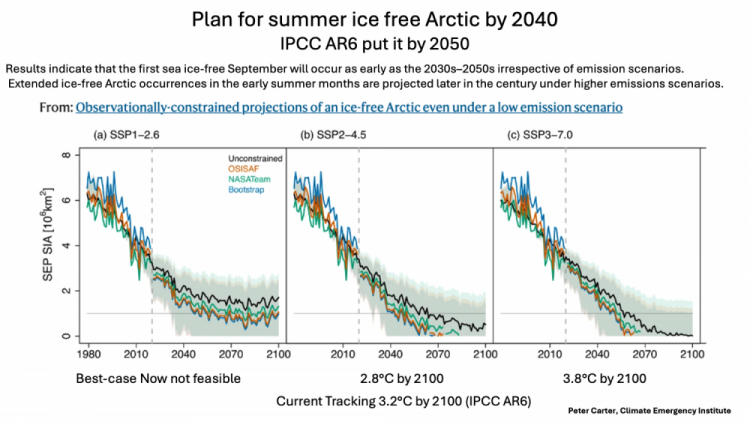
The loss of all the summer sea ice will increase the rate of Arctic warming 3.5 times (D Lawrence 2008) which will boost the rate of carbon emissions from the Arctic.
Since the record sea ice loss of 2007, the atmospheric methane concentration has been increasing and the scientists say this increase is due to wetland carbon feedback emissions, some of which is coming from the rapidly warming subarctic regions Arctic.
Wetlands are fast responders to an increase in regional warming.
Arctic methane hydrate has the potential to abruptly release a catastrophic amount of methane to the atmosphere, though considered unlikely and no in
Land based permafrost responds slower to warming as the methane is emitted as a result of micro-organisms digesting the thawed organic material.
However at a certain amount of thawing permafrost thaw becomes self perpetuating – irreversible. This because the microbial activity generates heat inside the thawing permafrost. Todays emissions of methane, CO and nitrous oxide from thawing permafrost is irreversible.
Arctic Ocean sea ice
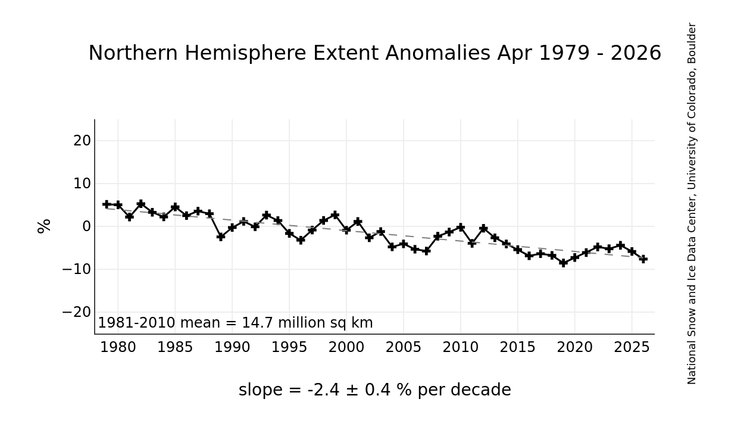
The Arctic sea ice extent was record low in 2012 with an abrupt loss, since when it has continued on a steady decline.
In 2026, the Arctic winter sea-ice extent (annual maximum extent) reached the lowest value since satellite observations began in 1979, following the previous record low in March 2025.
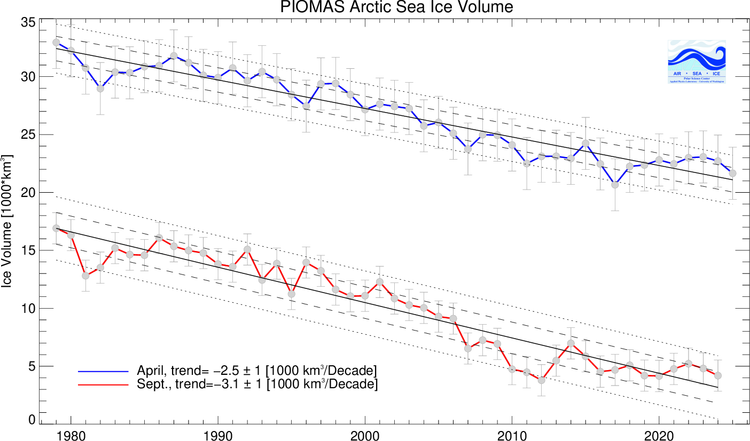
Sea ice volume is monitored for thicknesss, and it is steadily declining.
Loss of Arctic summer sea ice effect on Northern hemisphere PDF.
The vast expanse of Arctic summer sea ice (and spring-summer snow) have a cooling effect on the region which moderates the climate and weather of the temperate northern hemisphere.
This the Arctic summer air conditioner for the entire Northern hemisphere (as described by scientists). The loss of the ‘albedo’ cooling effect will disrupt the climate and increase extreme weather in northern latitudes. Research shows this has started already and linked to polar jet stream disturbance.
Drought is projected to increase. Extreme cold could affect some regions at unseasonal times. Without an emergency response now, it can be expected that crop yields of the world’s best food producing regions will progressively decline as Arctic temperatures increase faster.