Global warming has significantly increased extreme heat events, drought, wildfires, storms, and floods — and will continue to do so as long as global emissions are not put into decline. All extreme weather events damage crops. Extreme weather is most damaging to human population health and their crops, and damages ecosystems across every region of the world.
Most damaging impact to populations and to crops
Unprecedented and increasing extreme events on all continents, already.
2026 Super El Niño likely devastating (Nature, Editorial, 9 June 2026) El Niño is here, NOAA, Prediction Center , 11 June, 63% one of strongest.
The Watchers. Severe Weather Earth news & Wild fires
Interactive map Attributing extreme weather to climate change
Explainer of IPCC on extremes by Carbon Brief 10 August 2021
What the new IPCC report says about extreme weather
and climate change
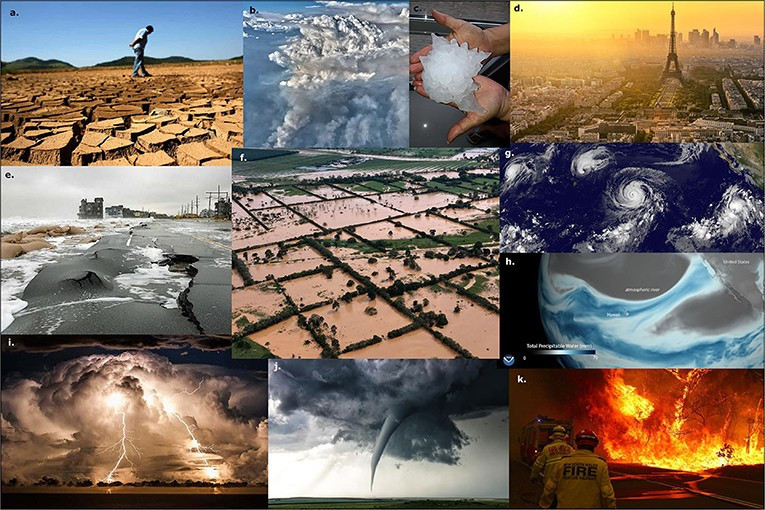
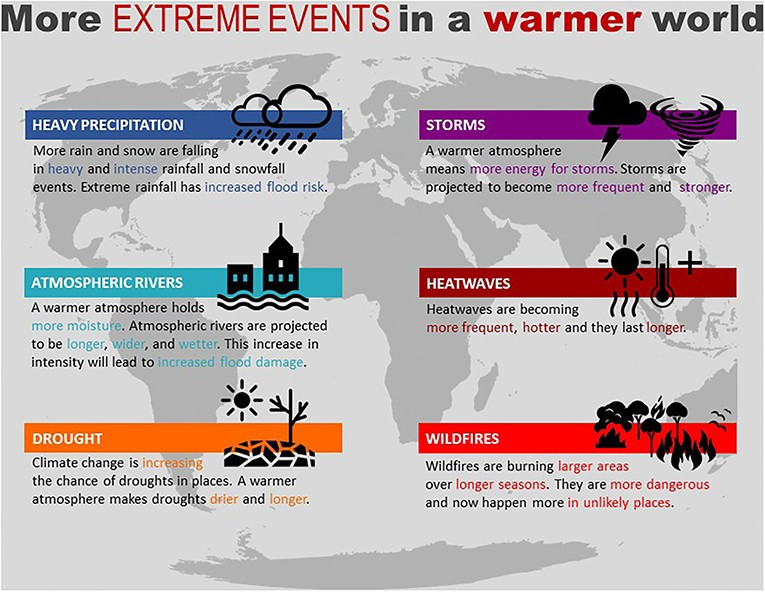
IPCC AR6 WG1 Extremes Full PDF All increasing & attributed to climate change
16 Dec 2021 Killer heat Waves and Floods Text and Photos (PDF)
2020 Hotspots of extreme heat under global warming (actual temperatures)
UN Climate Change News, 3 May 2018 The World Health Organization (WHO) has warned that records for extreme weather events are being broken at an unprecedented rate, and that there is a real risk for the world to lose its capacity to sustain human life if the Earth’s climate is further altered by adding ever more heat-trapping greenhouse gases.
FOREST FIRES The IPCC includes forest fires under extreme weather events
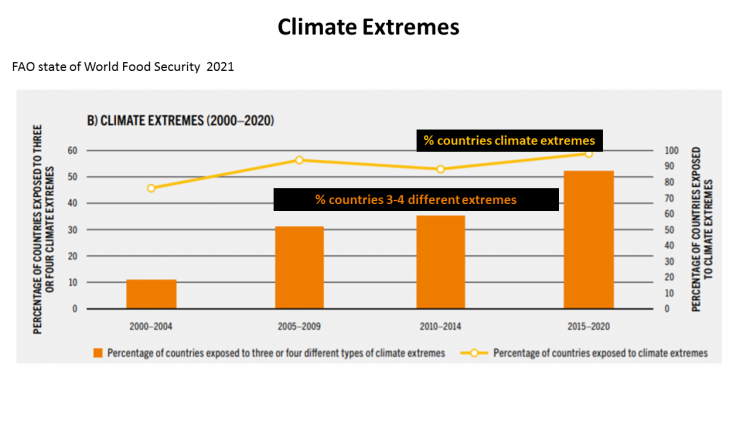
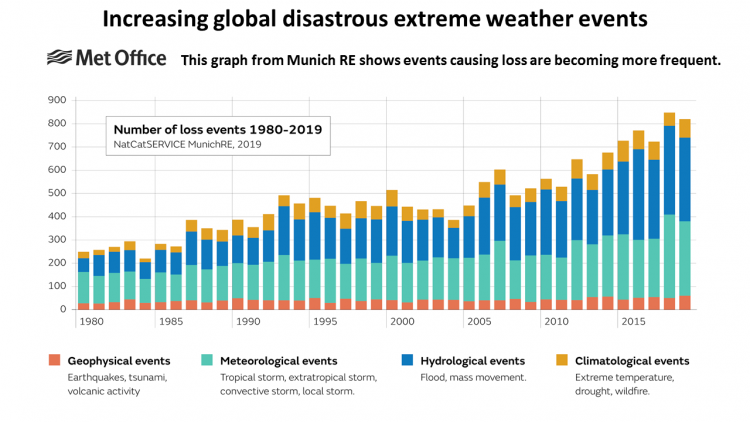
Climate change is increasing extreme weather events in all countries
31 March 2022 BAMS Explaining Extreme Events of 2020 from a Climate Perspective
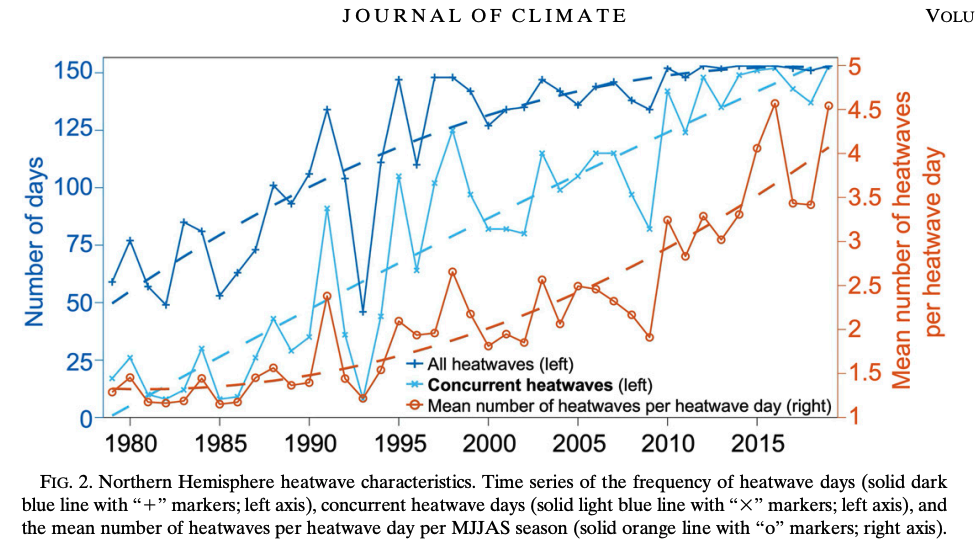
2022, Rogers, 6-fold Increase in N. Hemisphere Concurrent Large Heatwaves Driven by Warming…
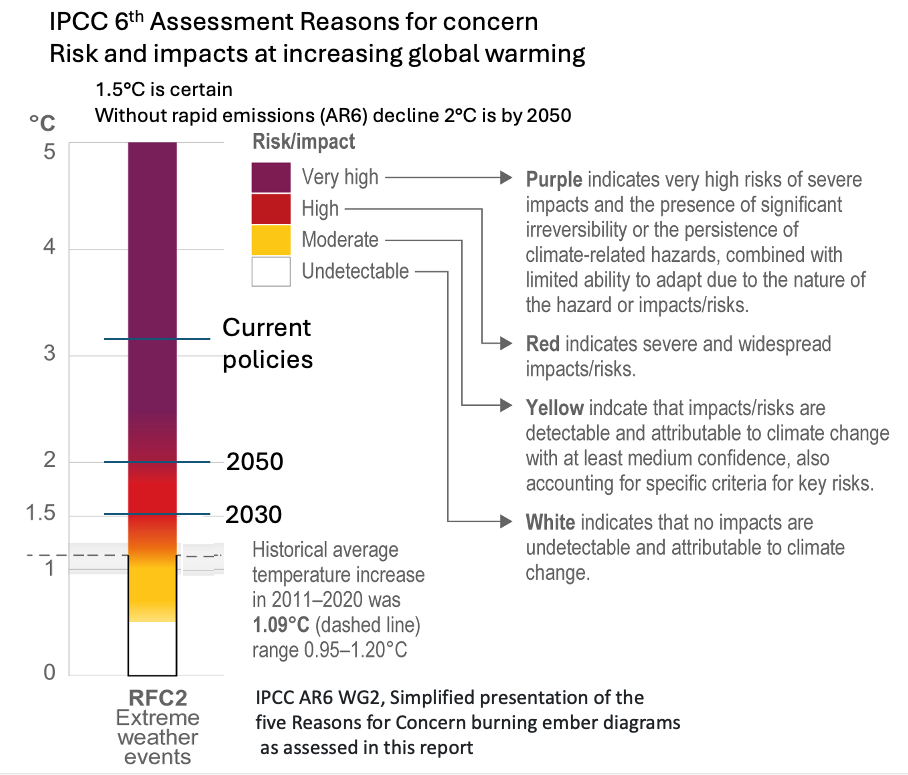
IPCC 6th Assessment
Extreme weather is most damaging to human population health and their crops, and damages ecosystems.
March 2023, Matias Heino, Probability of hot and dry weather extremes during the growing season threatens global crop yields
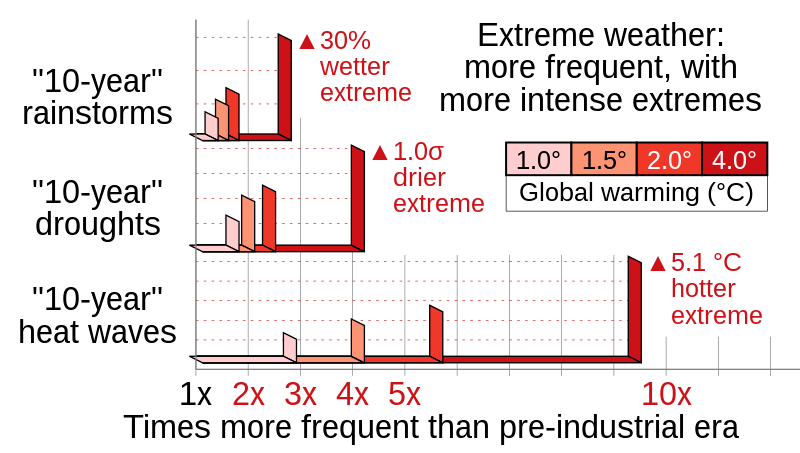
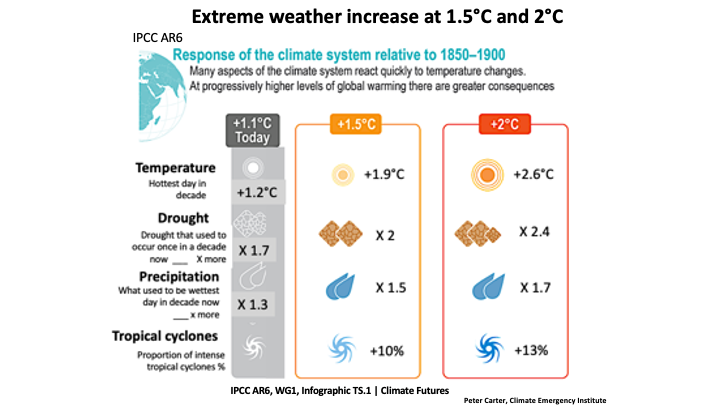
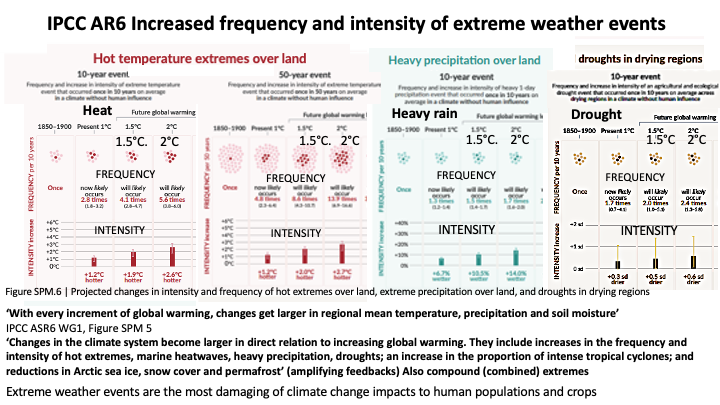
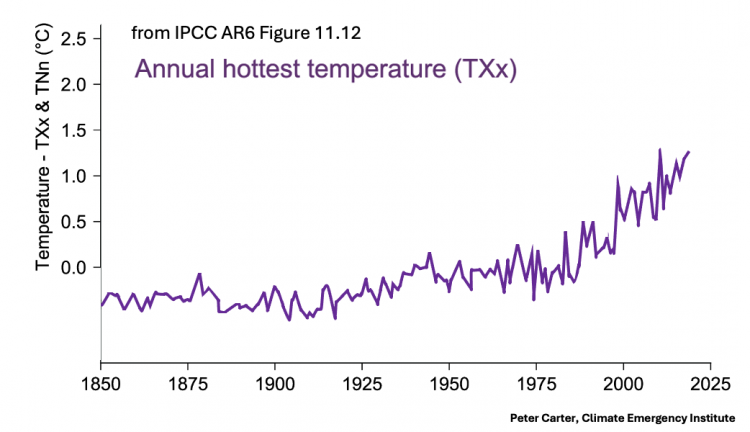
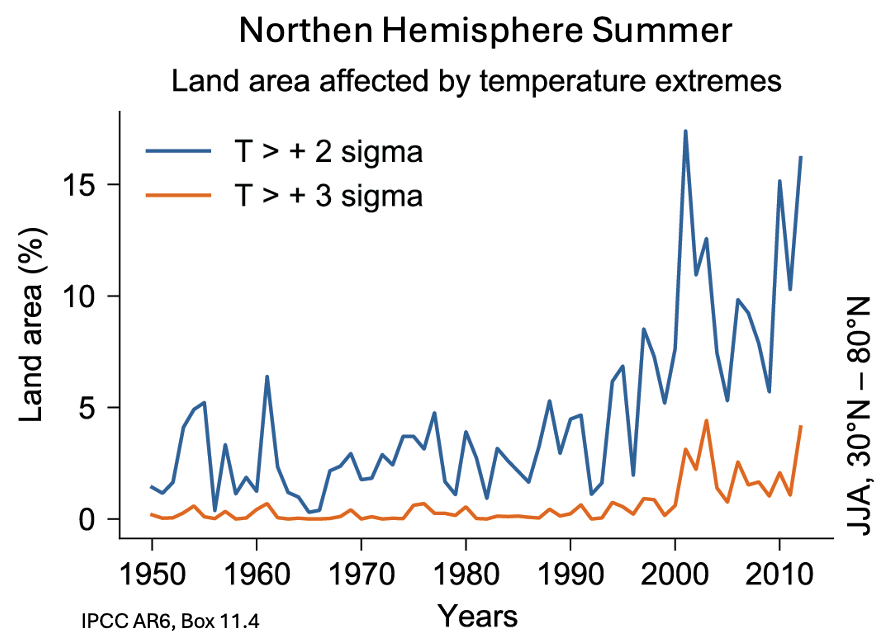
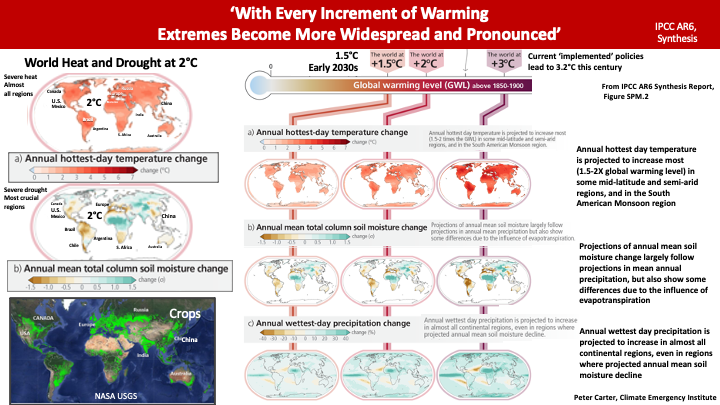
Basic climate science makes increasing extreme events certain
Global warming increases drought particularly in already drier regions.
If heat is extreme enough it causes drought by evaporating surface and soil moisture. Global warming increases atmospheric water vapor (warm air holds more water vapor) while the energizing of the hydrological cycle (heat is energy) leads to stronger winds, more heavy rains and flooding. The strength of tropical cyclone-type storms, such as hurricanes, is increased.
As global warming increases, climate extremes are increasing along with the average temperature and climate, and will continue to do so so long as global emissions are not put into decline .
Global warming increases heat waves, drought, wildfires, storms and floods
It was always predictable by the basic science that constant atmospheric GHG pollution, with increasing GHGs in the atmosphere, would lead to increased extreme weather. Global warming will increase extreme heat leading to increased drought, which together will increase the risk of wildfires. Global warming increases atmospheric water vapor because warm air holds more water vapor, and water vapor feedback increases warming.
In fact it has been long established that for every one degree C of warming the air will hold 7% more water (the Clausius–Clapeyron equation).
The increased GHG heat in the lower atmosphere increases lower atmosphere energy energizing of the hydrological cycle, leading to stronger winds, more heavy rains and flooding.
The strength of cyclonic storms, such as hurricanes, is increased by increased lower atmosphere energy and surface ocean warming.
As global warming increases, climate extremes increase along with the average temperature and climate. The most obvious is heat waves.
Global warming has so far significantly increased extreme heat events.
Computer models studies confirm that as global warming rises so will heat waves. By 2040 the areas affected will have increased several fold, and we are committed to this by climate system inertia.
Food Production Decline- Failure
All extreme weather events are damaging to crops
- Heat waves
- Drought
- Fires
- Torrential rains
- Floods- may be damaging to the soil as well (water-logged)
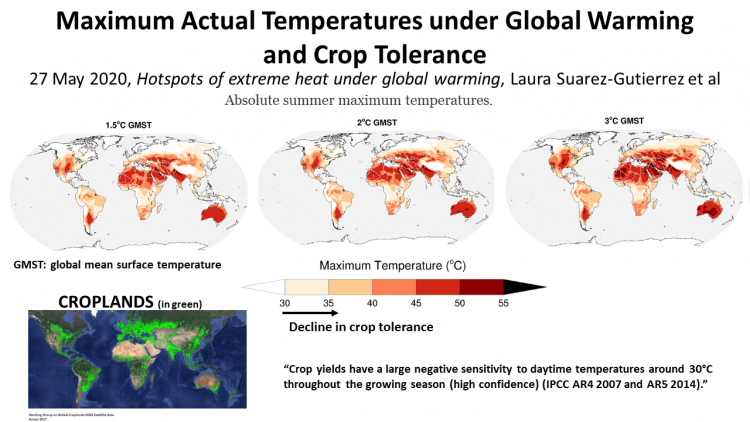
As temperatures increase, the crops tolerance to heat is exceeded and yields decline
Already with heat waves this has resulted in shocks to yields, in all major food producing regions
The rapid increase in Northern hemisphere warming and extreme weather threatens global catastrophe because all the world’s best food producing regions are in the Northern hemisphere.
Climate change prolonged extreme droughts have affected the US great grain belt region, Europe, China and South America.
This northern hemisphere extreme weather is being exacerbated by the rapid loss of Arctic albedo cooling (melt sea ice and snow) impacting on top of NH warming.
Scientists have called the Arctic summer sea ice ‘the air conditioner of the entire Northern hemisphere’. This air conditioning affect is from Arctic albedo cooling as a whole. The Far North snow provides about half the NH albedo cooling influence and is most important with respect to increasing NH drought. The loss of Arctic sea ice is altering the jet stream and this increasing all extreme weather events and also has a blocking effect on the weather prolonging the extremes (research by Jennifer Francis).