
Immediate and substantial reduction of CO2 emissions is required to prevent the massive mostly irreversible impacts on ocean ecosystems and their services (2015 publication).
IPCC 6th Assessment calls calls for ‘immediate’ rapid decline to stabilize climate
IPCC 6th Assessment Ocean Fact Sheet (short)
Insights IPCC’s Sixth Assessment, 2023, Climate Oceans Platform
IPCC 2019 Oceans Report extracts
Copernicus 2025, State of the Oceans Report
21 Sept 2021, Overview Ocean Climate Change Indicator Surface Temperature, (ii) Heat Content, (iii) acidity, (iv) Oxygen (v) Arctic Sea Ice (vi) Sea Level and (vii) AMOC
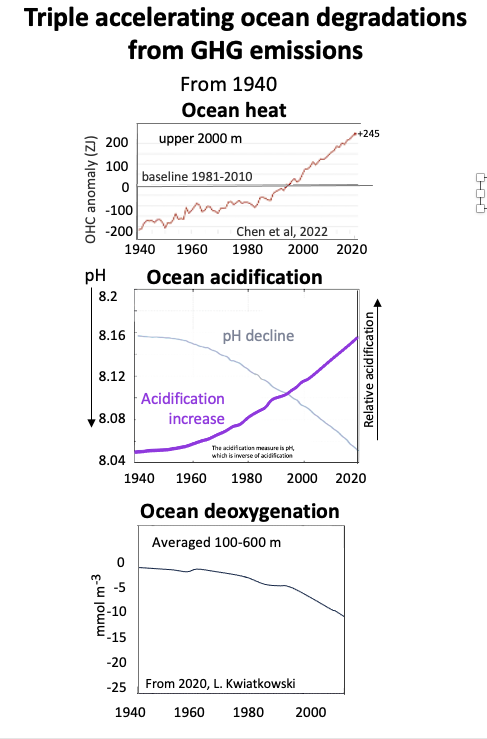
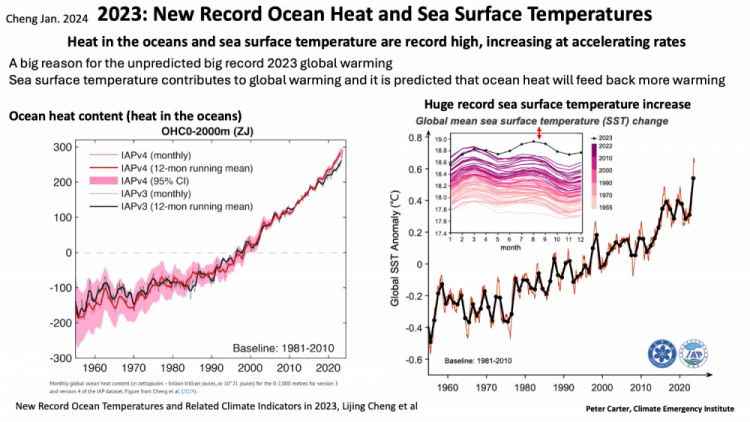
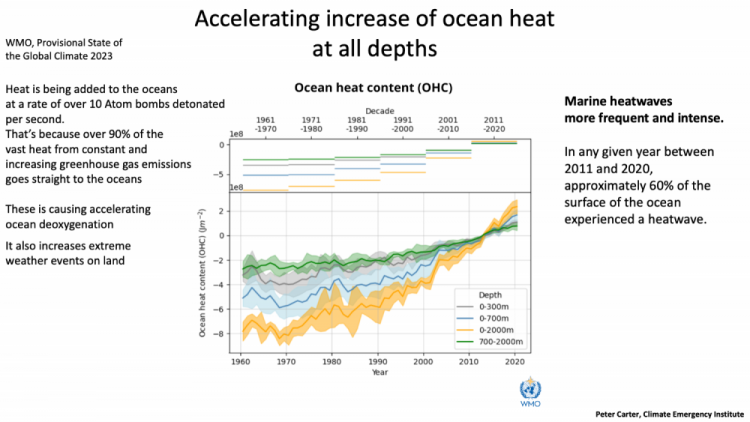
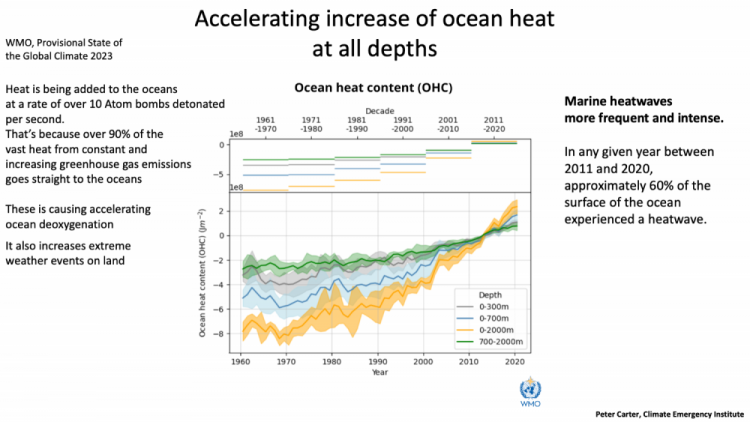
Greenhouse gas emissions damage the world’s oceans. They cause ocean heat (92% added GHG heat from
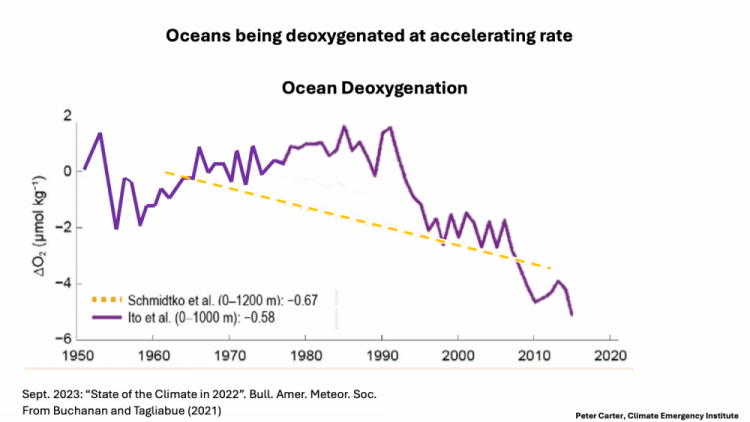
emissions has gone to the oceans-‘heat content’) This, and increasing sea surface temperature, is bringing about ocean deoxygenation (deep open ocean) CO2 emissions cause ocean acidification
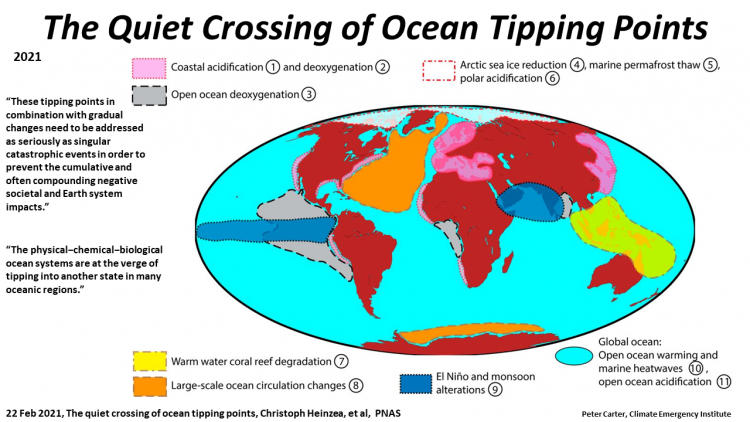
Triple assault on oceans
- Heating
- Acidification
- De-oxygenation
Today’s accelerating triple oceans degradation is a planetary emergency in its own right
Great straightforward information Ocean scientists for Informed Policy
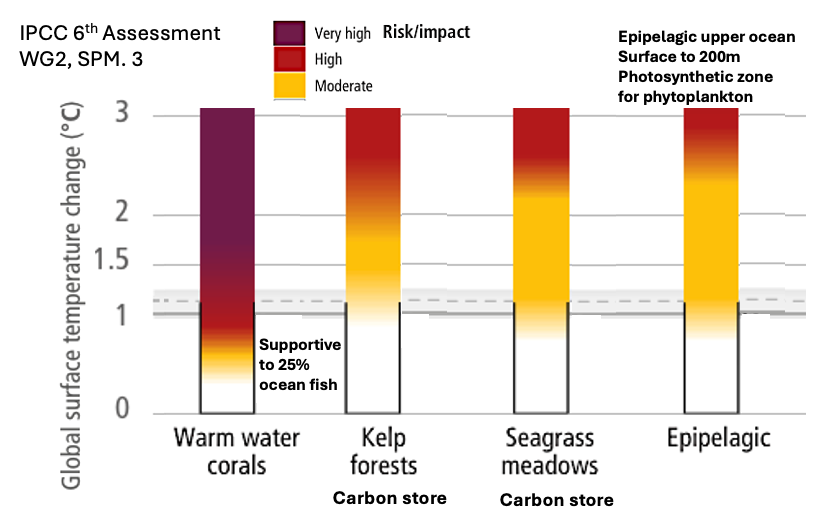
5 Oct 2021 State of World’s Coral Reefs 2020, 2009- 2018 14% coral loss Coral reefs are harmed by ocean surface warming and acidification. The Great Barrier Reef 2024 6th mass bleaching was the worst yet. As global temperatures will be above 1.5°C the tropical coral reefs are lost
July 2015 Science Immediate and substantial reduction of CO2 emissions is required to prevent the massive mostly irreversible impacts on ocean ecosystems and their services
According to the NOAA on ocean acidity, the oceans are more acid than they have ever been over the past 20 million years. In 50 years acidity will increase 120% if no emergency response is initiated.
Ocean acidofication is faster today than it has over the past 300 million years
Warming of the surface water causes bleaching and death of corals reefs, which play a fundamental role in supporting ocean biodiversity.
Deeper ocean warming slows currents that play a crucial role in bringing oxygen and food to marine creatures, and also in ocean cleansing. Consequently, deep hypoxic ocean dead zones are forming and expanding.
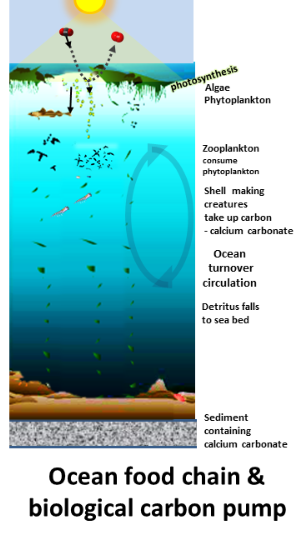
Plankton
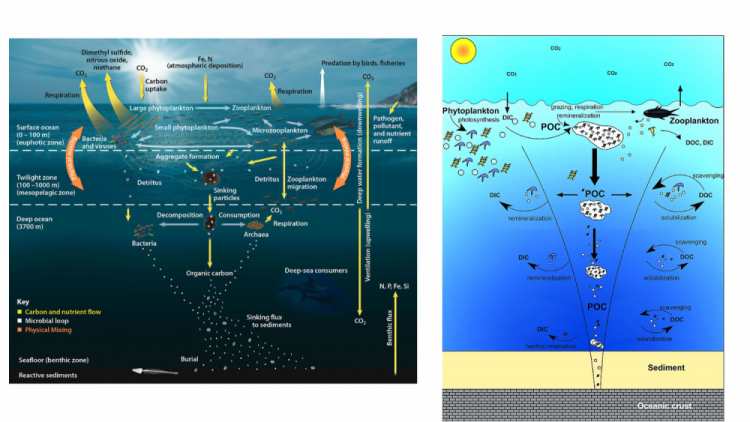
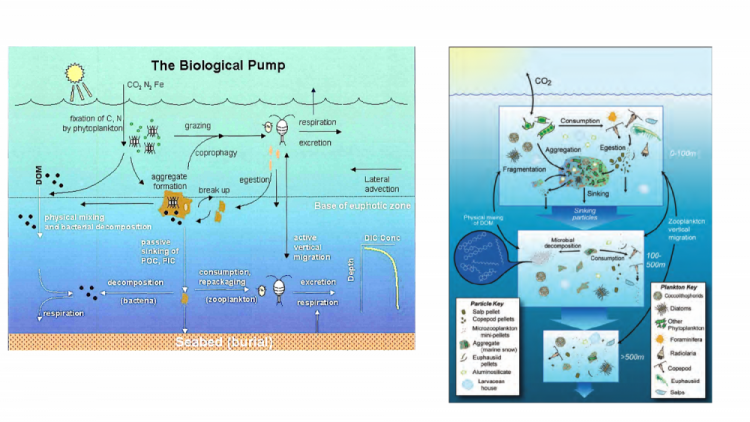
Tiny organisms are hugely important. They produce over half of our oxygen, major contribution to the ocean carbon sink. They are essential our survival, and essential for most life. This short peice by MIT is helpful
They are affected by ocean warming and acidification. Acidification impairs shell producing zooplankton, essential to the oacen carbon sink. One thing that appears certain is that ocean heating will deprive plankton of nutrients, because this happens by the vertical mixing of ocean water. Some phytoplankton suffer under warming while some prosper- the large rapid changes to composition would be expected to be harmful to ocean ecosystems. Ocean acidification is harmful to some.
The shell forming zooplankton are harmed by ocean acidification, so impairing the ocean carbon pump- the basis of the ocean carbon sink
Projections
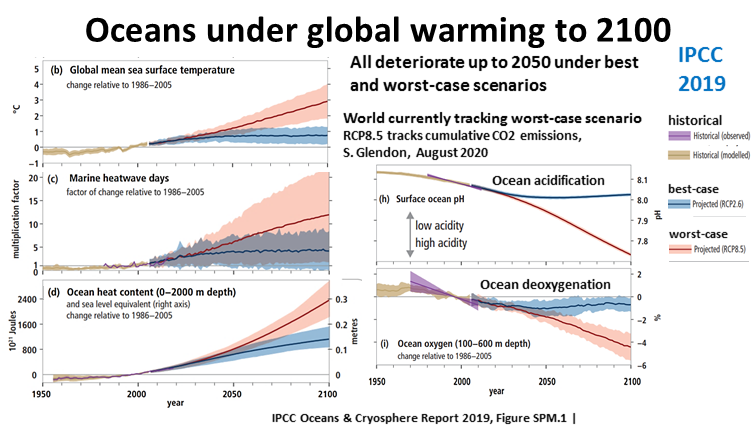
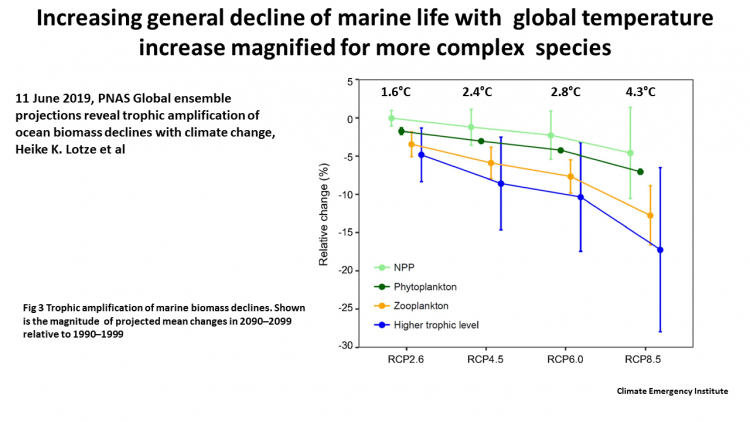
3 July 2015 ‘…impacts on key marine and coastal organisms, ecosystems, and services are already detectable, and several will face high risk of impacts well before 2100, even under low-emissions scenario. These impacts will occur across all latitudes. Immediate and substantial reduction of CO2 emissions is required to prevent the massive and mostly irreversible impacts on ocean ecosystems and their services
15 Jan 2015 Ocean Life Faces Mass Extinction, Broad Study Says.